
AI and the future STEM workforce: keeping opportunities open to everyone
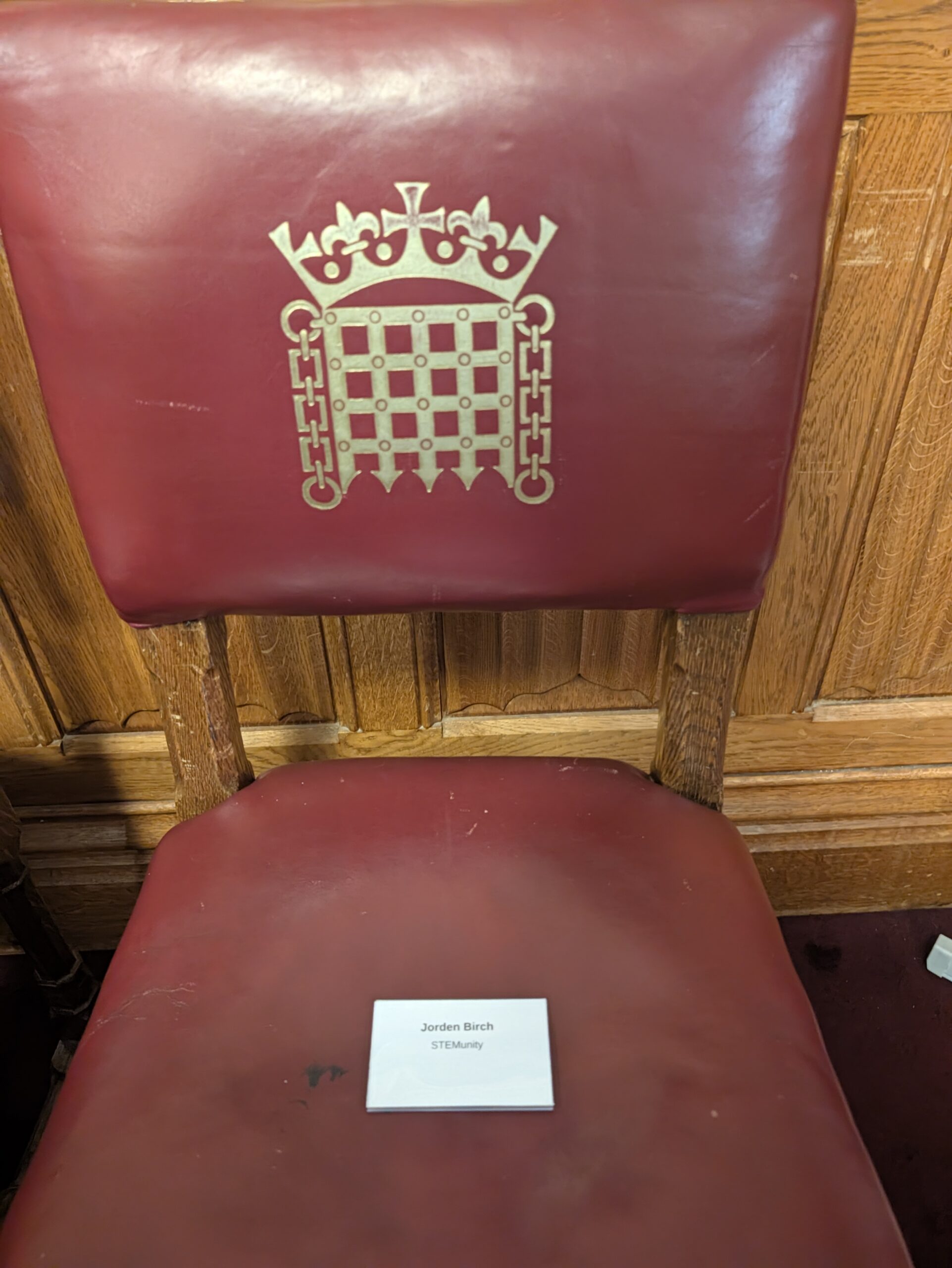
How do we prepare young people for a changing workplace while making sure the first step into a STEM career remains open to everyone? That question brought STEMunity’s co-founder and COO, Jorden Birch, to Parliament on 14 October for an evidence session of the All-Party Parliamentary Group on Diversity; Inclusion in STEM: Reshaping the labour market: Is AI raising the bar for entry into the STEM workforce?
Hosted by Baroness Brown of Cambridge and chaired by Samantha Niblett MP, the session explored how artificial intelligence is changing recruitment, early career opportunities and workplace learning.
Contributors included Stephen Isherwood, Joint Chief Executive of the Institute of Student Employers; Sparsha Hebbur, Head of Strategic Planning at SThree; Dr Ambily Banerjee, Non-Executive Director of the Micro Educational Foundation; Aubree Slavik, Delivery Manager at the University of Southampton’s
CORNERSTONE Photonics Innovation Centre; and Ashleigh Ainsley MBE FRSA, Co-Founder of Colorintech. For STEMunity, the discussion connected closely with the young people, teachers and employers we work with, and the opportunities we want to help create.

Getting that first opportunity
One observation from Sparsha Hebbur, captured in Jorden’s notes, brought the challenge into focus: “STEM is not short of jobs, it is short of entry-level jobs.”
As AI takes on tasks that might previously have been carried out by someone starting their career, employers face an important question: where will the next
generation gain experience? Early roles give people the chance to ask questions, make mistakes, learn from colleagues and gradually take on responsibility. If those roles change, the opportunities to learn need to be protected. There is a question of fairness here, too. If getting started requires more experience, professional contacts or additional training, young people without access to those advantages could face an even harder route into work. Encouraging young people to consider STEM must go alongside realistic opportunities for them to enter the workforce and develop.
Seeing the person behind the application
The use of AI on both sides of recruitment prompted plenty of discussion. Candidates can use it to produce applications quickly, while employers can use automated tools to manage the volume they receive. But how do we make sure someone’s potential is recognised in that process? A polished application can only tell us so much about a person’s curiosity, practical ability or willingness to learn. Young people need clear guidance about acceptable AI use and opportunities to demonstrate their own strengths.
For those unfamiliar with recruitment, or without someone to help them navigate it, that support can make a considerable difference.
Confidence needs to be backed by action
Another comment recorded in Jorden’s notes came from Aubree Slavik: “If you want women to worry less about AI, give them less to worry about.” It was a reminder that reassurance needs to be supported by action. Concerns about bias, fairness and opportunity deserve practical responses, including clear expectations, accountability and meaningful human oversight. The discussion also considered AI’s potential to support inclusion. Used thoughtfully, it could help some neurodivergent people organise or communicate their ideas, support learning and reduce time spent on routine tasks. Those benefits depend on people having access to appropriate tools, guidance and opportunities to question how they are used.
What this means for STEM education
For STEMunity, the session reinforced the importance of giving young people opportunities to develop and trust their own thinking. Subject knowledge, critical thinking, creativity and communication all featured in the discussion. Young people need to be able to question evidence, recognise bias, explain their reasoning and judge whether an answer makes sense.
These skills need practice. Through hands-on STEM activities, young people can test ideas, make decisions, work with others and explain what they have discovered. When a design does not work first time, they have a reason to investigate, adapt and try again.
These experiences help young people recognise their strengths and build confidence in the contribution they can make. We left Parliament with plenty to reflect on, particularly the importance of keeping education and employers connected as roles change. Young people deserve an honest understanding of the challenges ahead, alongside support to explore the opportunities.
Thank you to the APPG on Diversity Inclusion in STEM, the British Science Association, the hosts and all the contributors for a thoughtful discussion. At STEMunity, we will keep working to help young people develop the skills, confidence and connections to find their place in STEM.






Leave A Comment